
Exit 8
A film review

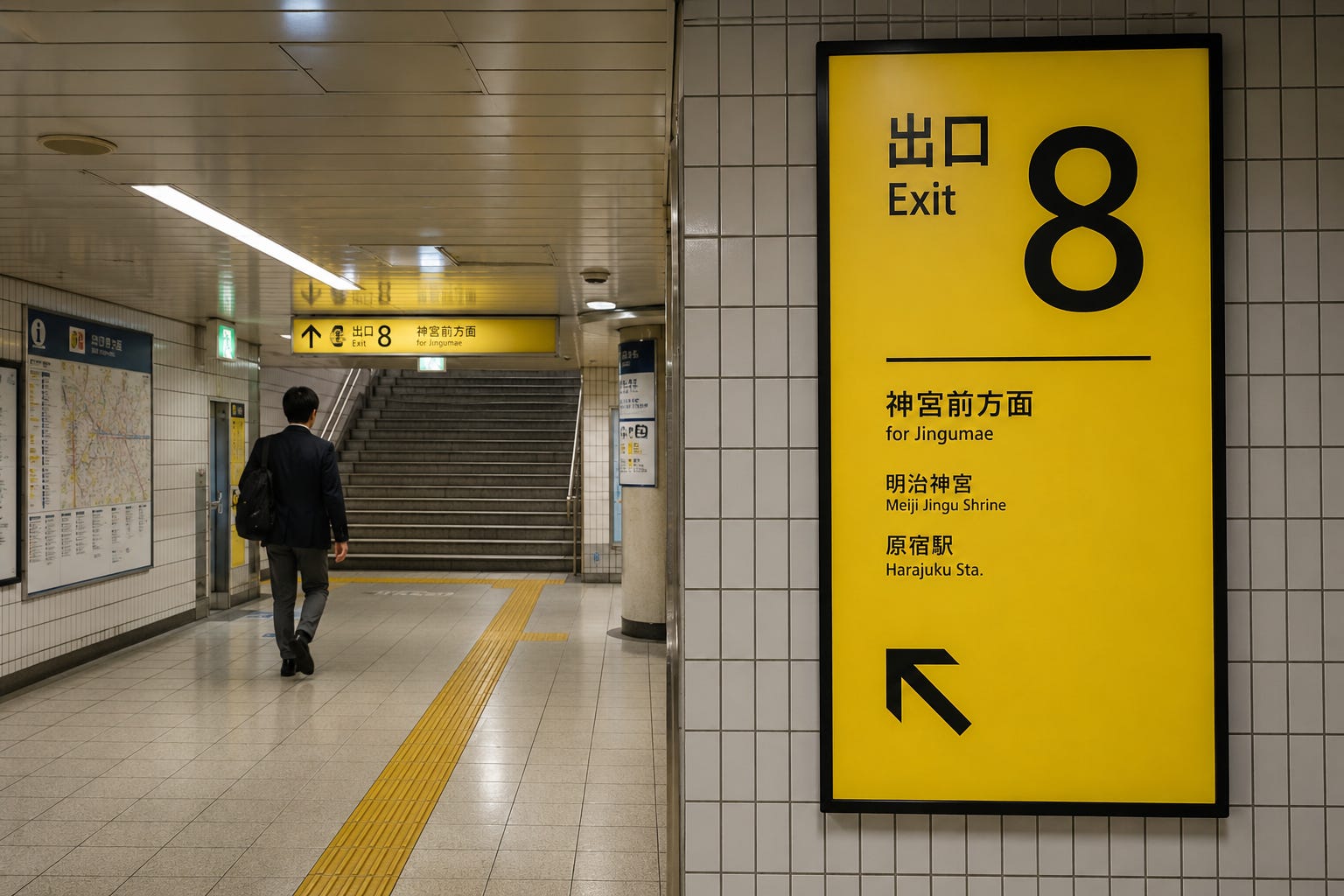
I went to see Exit 8 late Wednesday night, partly because there was almost no other time to see it. I don’t normally go to late films, and I rarely watch Japanese cinema, so from the beginning the whole experience felt slightly unfamiliar.
The film category was horror, but not in the way many Western audiences might expect. There are no constant jump scares, no gore-filled spectacle, no predictable moments where everyone in the cinema leaps. Instead, the horror is quieter and more psychological. It builds through repetition, unease, and the gradual sense that reality itself has slipped slightly out of alignment.
The premise is deceptively simple. A man becomes trapped in an underground passageway connected to a Japanese train station, walking the same route again and again, searching for anomalies that might help him escape. At first the corridor appears ordinary. Then tiny details begin to shift. A sign changes. A face lingers too long. A child appears. The familiar becomes subtly wrong.
What surprised me was how quickly the film stopped feeling like a conventional horror story and began to feel symbolic. Watching people move endlessly through the same sterile corridors, I found myself thinking about working life, routine, and the strange experience many people have when they begin questioning the life they have built.
So many people spend decades moving through the same patterns. Wake up. Travel. Work. Return home. Repeat. For years it feels normal because everyone around them is doing the same thing. Then eventually something shifts. A redundancy. Retirement. Burnout. Bereavement. A birthday ending in zero. And suddenly the life that once felt purposeful can begin to feel oddly repetitive, even unreal.
The corridor in the film began to feel less like a physical place and more like a metaphor for being trapped inside a version of life you no longer fully belong to, yet not knowing how to leave.
That, for me, became the real tension in the film. Not “What is the monster?” but “How do we notice when we are sleepwalking through our own lives?”
Perhaps because I work and write about later life and transitions, I couldn’t help connecting it to the conversations I hear so often from people approaching retirement or who are already there. Many leave work expecting freedom, only to discover disorientation instead. Others know they want to leave but are frightened by the question that follows: what then?
The film captures something of that psychological state remarkably well. The endless circling. The uncertainty. The search for clues. The hope that somewhere there is an exit, even if you no longer quite remember what freedom is supposed to look like.
I had gone to the cinema straight after a three-hour creative session at the Wilson, making a zine through cutting, arranging, and collaging images and words. In retrospect, that mattered. Both experiences involved paying attention differently. Collage asks you to notice fragments and hidden relationships. So does this film. Perhaps that is why it stayed with me afterwards.
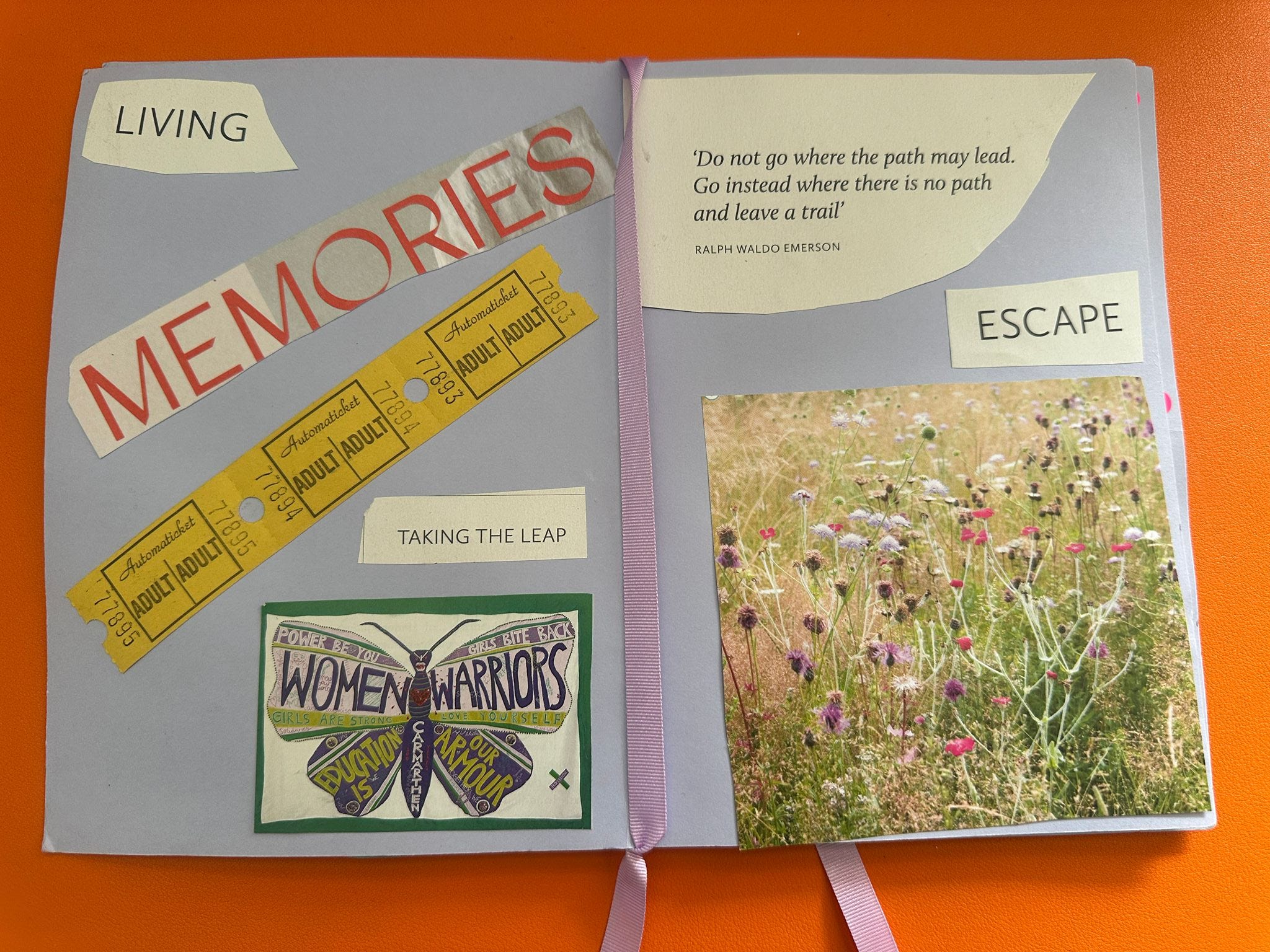
What I appreciated most about Exit 8 was its restraint. The fear comes less from shock than from recognition. The possibility that many of us are moving through familiar corridors every day, barely noticing how lost we may have become.
I left the cinema unsettled, thoughtful, and strangely reflective about modern life itself. Not bad for a late-night Japanese psychological horror film based on a computer game.