

Learning to Be

One of the strangest things about leaving full-time work is discovering how difficult it can be to do nothing. Not nothing in the sense of sitting in front of the television all day. Not disengagement. Not apathy. Something much harder than that.
Simply being.
For most of our adult lives, time is organised around productivity. We work. We commute. We shop. We cook. We clean. We exercise. We care for family. We squeeze friendships into whatever space remains. Life becomes a series of tasks to complete and responsibilities to fulfil.
And if we’re lucky enough to find some free time, we often feel the need to make good use of it.
Read a worthwhile book. Learn a language. Take a course. Start a side hustle. Volunteer. Improve ourselves. Even our leisure has objectives.
Recently, I spent a few days in Portmeirion, the Italianate village on the North Wales coast. It was a solo trip, something I increasingly enjoy. There was no itinerary beyond a vague intention to wander, read, think and see what emerged.
Yet I noticed something familiar.
A voice in my head kept insisting I should be doing more. I should have read more about the history before arriving. I should have followed the locations from The Prisoner more carefully. I should have planned my photography better. I should have seen more, understood more, achieved more. It is remarkable how persistent that voice can be, even when there is nothing to achieve.
If these articles resonate with you, you can support my writing with a paid subscription or by buying me a coffee using the link below. Your support gives me the time and space to keep exploring these questions.
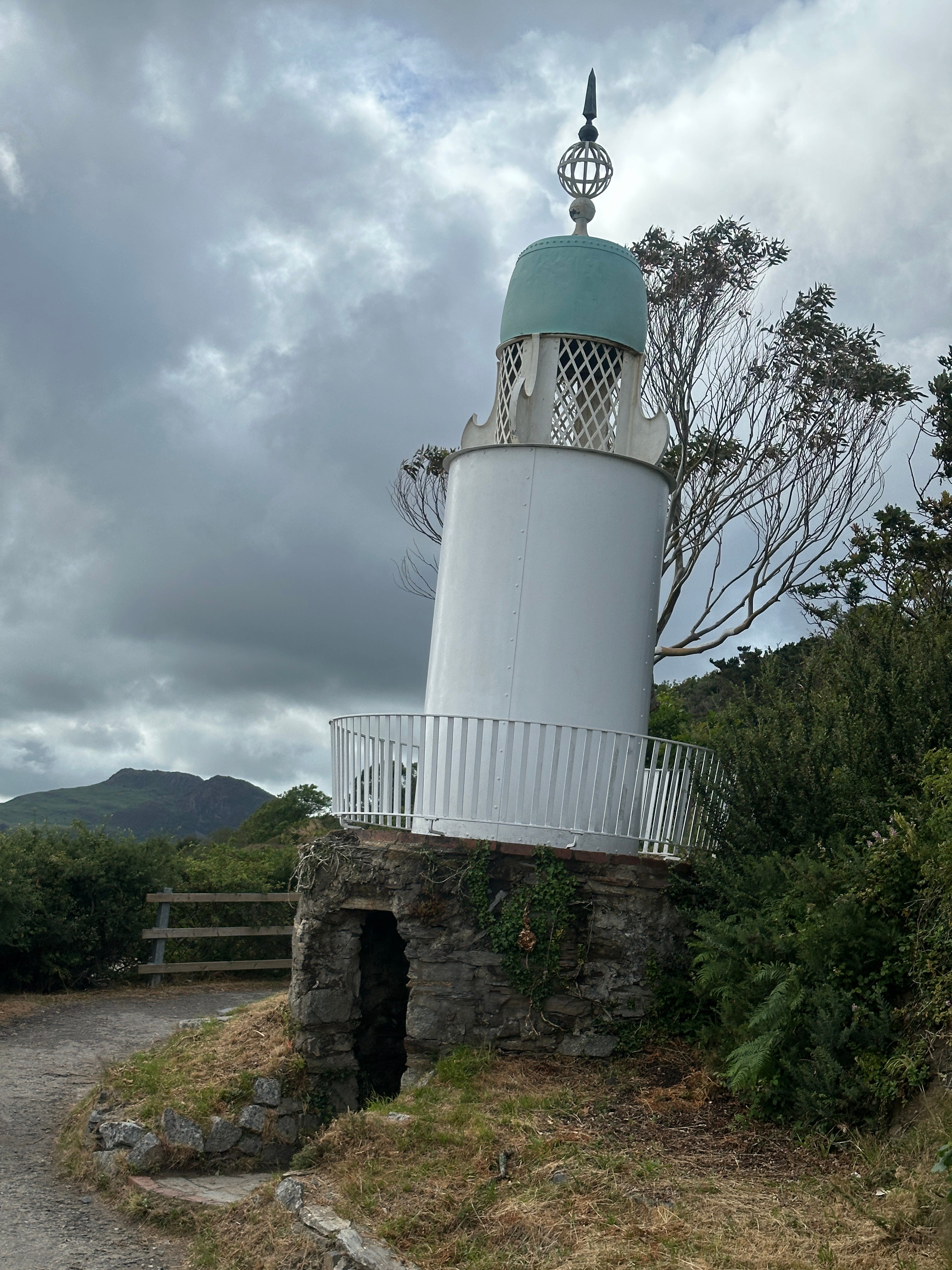
One afternoon I walked out to the lighthouse and sat alone overlooking the sea. A few people passed by, but most continued on. I stayed.
For a while I read. For a while I watched the water. For a while I simply sat. Nothing happened. And yet something happened.
The longer I sat there, the more I realised how unusual such moments have become. Not because they are difficult to find, but because they are difficult to justify.
We have become accustomed to measuring the value of our time by what it produces. What did you accomplish? What did you learn? What did you finish? What did you contribute?
These are useful questions, but they are not the only questions.
In retirement and later life, many of us simply replace one set of expectations with another. The message we receive is clear: stay active, stay productive, stay relevant. Keep your brain engaged. Take up new hobbies. Volunteer. Start a business. Write a book. There is wisdom in much of this advice. Purpose matters. Physical activity matters. Connection matters.
But I sometimes wonder whether we pay enough attention to another human need: spaciousness.
The philosopher Josef Pieper, whose work influenced some of my thinking when writing ThriveSpan, argued that leisure should not exist merely to prepare us for more work. Leisure, in its deepest sense, is valuable in its own right.
I find that idea increasingly appealing. Because some of the most meaningful moments of my life have not been productive ones. They have happened while walking through woods. Swimming in cold water. Watching deer emerge at dusk.
Sitting with a friend after the meal has finished and neither of us is in a hurry to leave. Reading a novel with no intention of learning anything from it. Standing still long enough to notice what is around me.
Or what is within me.
Perhaps this is one of the hidden invitations of later life.
Not simply to fill our time differently, but to experience it differently. To move, occasionally at least, from achievement to attention. From productivity to presence. From doing to being.
I am not advocating idleness. Nor am I suggesting that purpose no longer matters. Rather, I am questioning the assumption that every hour needs to justify itself.
Some experiences are valuable precisely because they lead nowhere. Some conversations do not need an outcome. Some walks do not need a destination. Some afternoons do not need a purpose.
As I sat by the lighthouse in Portmeirion, I found myself thinking about how much of life has been spent rushing from one thing to the next, convinced that meaning lay just beyond the next achievement.
These days I am less certain. Perhaps meaning is not something we create by filling every empty space. Perhaps sometimes it arrives when we stop trying so hard and leave a little room for it to find us.
And perhaps one of the gifts of growing older is finally giving ourselves permission to stand and stare.
.
Denise, your latest post reminded me of the poem ‘Leisure’ by the Welsh ‘tramp’ poet, W H Davies…
Leisure
What is this life if, full of care,
We have no time to stand and stare?-
No time to stand beneath the boughs
And stare as long as sheep or cows:
No time to see, when woods we pass,
Where squirrels hide their nuts in grass:
No time to see, in broad daylight,
Streams full of stars, like skies at night:
No time to turn at Beauty's glance,
And watch her feet, how they can dance:
No time to wait till her mouth can
Enrich that smile her eyes began?
A poor life this if, full of care,
We have no time to stand and stare.
W H Davies
Thanks Denise. I’m not convinced doing is necessarily bad or a reflex. For me, retirement has opened my mind in many new direction and doing feels alive.