
When Acknowledgement Changes Shape

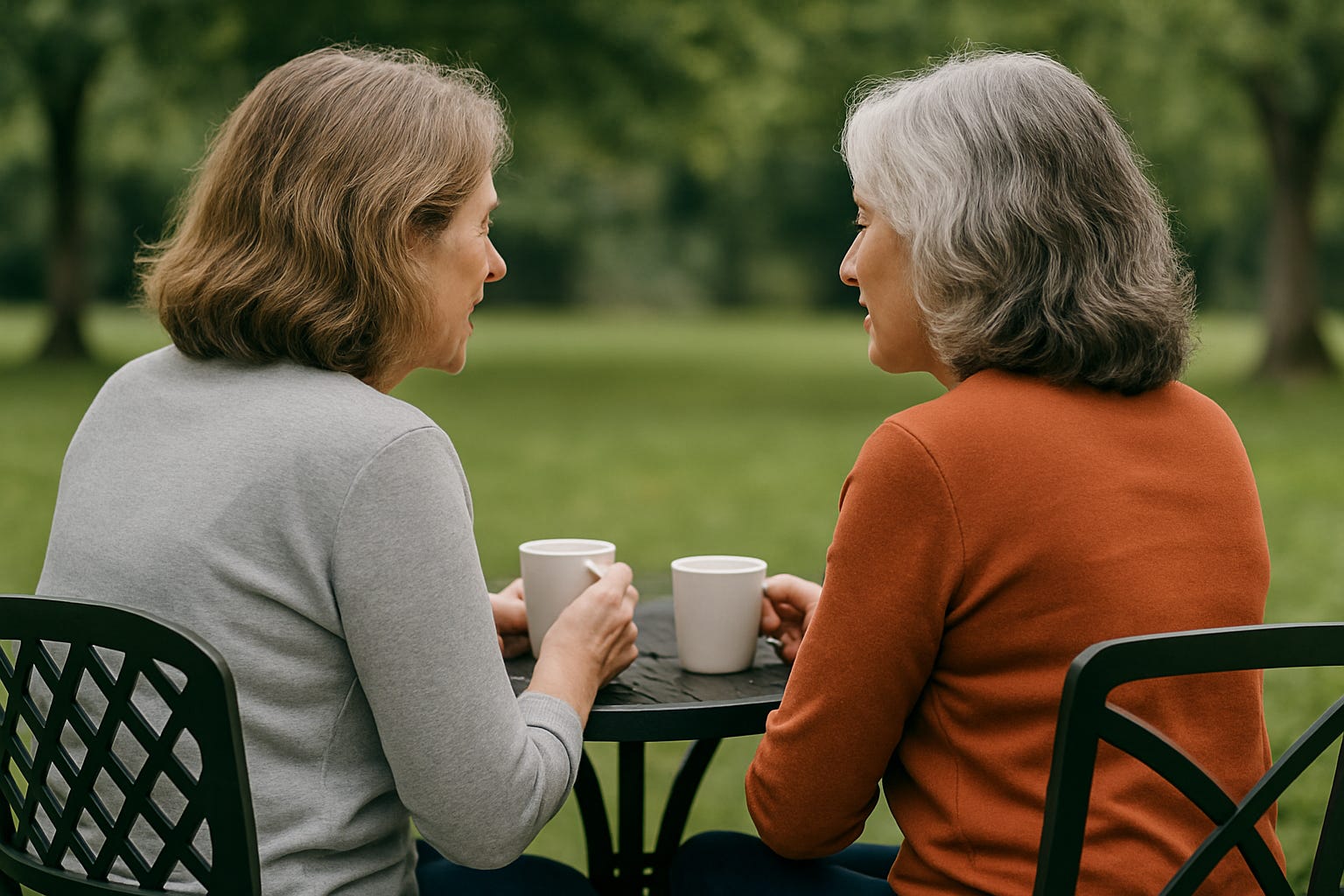
One of the things I’ve come to notice about my writing is that it often begins with a conversation. A comment, a question, something that I reflect on longer than expected.
Recently, a reader responded to a piece I wrote some time ago about meaning beyond the workplace. She described something many people recognise, though not always so clearly.
She had stepped away from work and was, in many ways, busy enough. Days could be filled with hobbies and activities. But something still felt missing.
Not a lack of things to do.
Something quieter than that.
She wrote about the need to have things to look forward to, small things, larger things, moments that carry a sense of anticipation. And alongside that, she named something else.
The absence of acknowledgement.
Not just doing something meaningful, but knowing that it has been seen, recognised, valued.
It’s a subtle loss, and one that isn’t always spoken about.
In working life, acknowledgement is often built into the structure. Feedback, recognition, progress, even the simple rhythm of being part of something larger. We may not always notice it at the time, but it is there.
Outside of that structure, things become less defined.
Contribution doesn’t disappear, but the ways it is recognised are less obvious. More diffuse. Sometimes absent altogether.
I responded to her at the time by saying that this doesn’t disappear, but it does change shape.
And that seemed to stay with her.
She wrote again:
“The biggest puzzle remaining for me is the validation or acknowledgement of contribution. I do miss it, but do I still need it? Or do I need it in the way I used to get it?”
That question feels central.
Because it moves us away from a simple yes or no, into something more reflective.
It may not be that the need for acknowledgement disappears. After all, to contribute and to feel that contribution matters is deeply human.
But perhaps what changes is the form it takes.
In working life, acknowledgement is often external, structured, and relatively immediate. It comes through roles, titles, feedback, outcomes.
Later in life, those structures loosen.
And what can emerge, though not always easily, is something different.
Acknowledgement that is quieter.
Less frequent, perhaps.
But often more meaningful when it arrives.
A conversation that lands.
A moment of connection.
A sense that something you have offered has made a difference, even if no one formally names it.
There is also another shift taking place.
For many people, the habit of seeking acknowledgement has been shaped over decades. It becomes part of how we understand ourselves, our value, our place in the world.
So, the question isn’t simply whether we still need it.
It is how we relate to it now.
What happens when the old structures fall away?
What do we notice in their absence?
What, if anything, begins to take their place?
My reader described this as exploring “new ways to approach an old habit.”
That feels exactly right.
Because this isn’t something to solve quickly. It’s something to notice, to sit with, to understand over time.
And perhaps that is part of the wider transition into later life.
Not rushing to fill the space.
Not immediately recreating what was there before.
But allowing a different relationship with contribution, meaning, and acknowledgement to emerge.
It does take time to figure out.
And in that sense, the question itself may be part of the answer.
Love this because, of course, it is so very relevant. Slowly, but surely, it’s a shift in how we begin to see, witness and acknowledge our own selves in the world. The process is slow but staying honest and being with the discomfort in our hearts as it arises, not judging and staying curious about how we reorient—eventually erodes the hard edges of the feelings of loss. We are indeed being shaped anew. Trust yourself, and the process—-it is how we blossom into ourselves in the next stage of our life.
Hi Denise, Your article is wonderful and insightful. I'm so glad we had that exchange! Your thoughts fit exactly right with me. I have been sitting with things more, trying to "relax" my overactive brain. It's allowing space to find a new way forward without the built in structure I'd taken for granted. Leaning into changing expectations based on old habits. I love the idea of finding the quiet acknowledgements for myself! This is something I'm really going to embrace. You're right, I think a shift in thinking is going to take some time but luckily, I have that now! The key for me was recognizing my confusion with it all (why am I not just happy?), and understanding the complexities of what was really happening under the hood. Now it's like a new kind of puzzle to solve, slowly, with curiosity rather than anxiety. Thanks for the post! It's so encouraging and incredibly helpful!